
Reviving the Ummah Starts With Our Children
Jul 09, 2026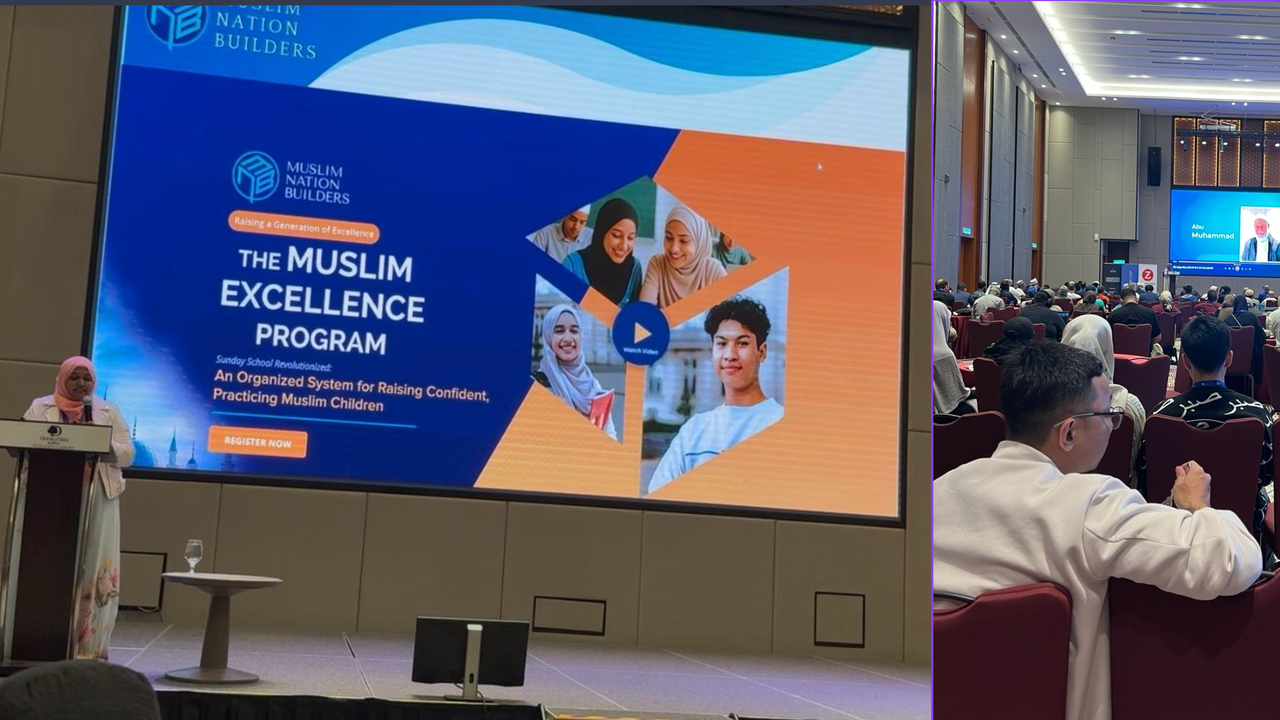
The Journey That Led Me to TPSS — And Why It Strengthened My Hope for the Ummah - Fouzia Usman
"Indeed, Allah will not change the condition of a people until they change what is within themselves." — Qur'an 13:11
There is a question that has followed me for years.
How do we revive an Ummah?
Not politically.
Not economically.
Not technologically.
But spiritually, intellectually, and civilizationally.
How do we once again become a people who contribute to the world—who produce scholarship, innovation, compassion, justice, and excellence—not as scattered individuals, but as an Ummah with a shared purpose?
This is not a question that appeared in my mind overnight. It has quietly accompanied me for more than a decade. As a mother. As an educator. As someone who has spent years working with Muslim children and families through Muslim Nation Builders, I have witnessed the challenges they face. And as someone who has watched generation after generation of young Muslims grow up in environments that shape every part of their identity except the one that matters most — their identity as servants of Allah.
Over the years, I have listened to countless conversations about the problems facing our Ummah. Some point to politics. Others to media. Some blame education, social media, or the loss of Islamic scholarship. There is truth in each of these.
But every time I reflected on the future, I returned to the same conclusion.
The future of the Ummah will not be decided twenty years from now.
It is being decided today—in our homes, in our classrooms, in our masajid, and in the hearts of our children.
If we hope to see a stronger Ummah tomorrow, we must first ask ourselves a different question.
Who are we raising today?
Not simply doctors, engineers, attorneys, or entrepreneurs. But believers. Leaders. Thinkers. Builders. Young Muslims who know Allah, understand their purpose, take pride in their Ummah, and strive for excellence in everything they do.
That conviction became the foundation of Muslim Nation Builders. At the time, I had no idea how Allah would continue to refine and strengthen it through a series of journeys that, looking back now, seem far too perfectly connected to be mere coincidence.
Looking Back, Allah Was Connecting the Dots
There are moments in life that only make sense in hindsight.
At the time, they seem ordinary. A family vacation. A conference invitation. A conversation with someone you have never met. A city you have always wanted to visit.
You do not realize that each experience is quietly preparing you for the next.
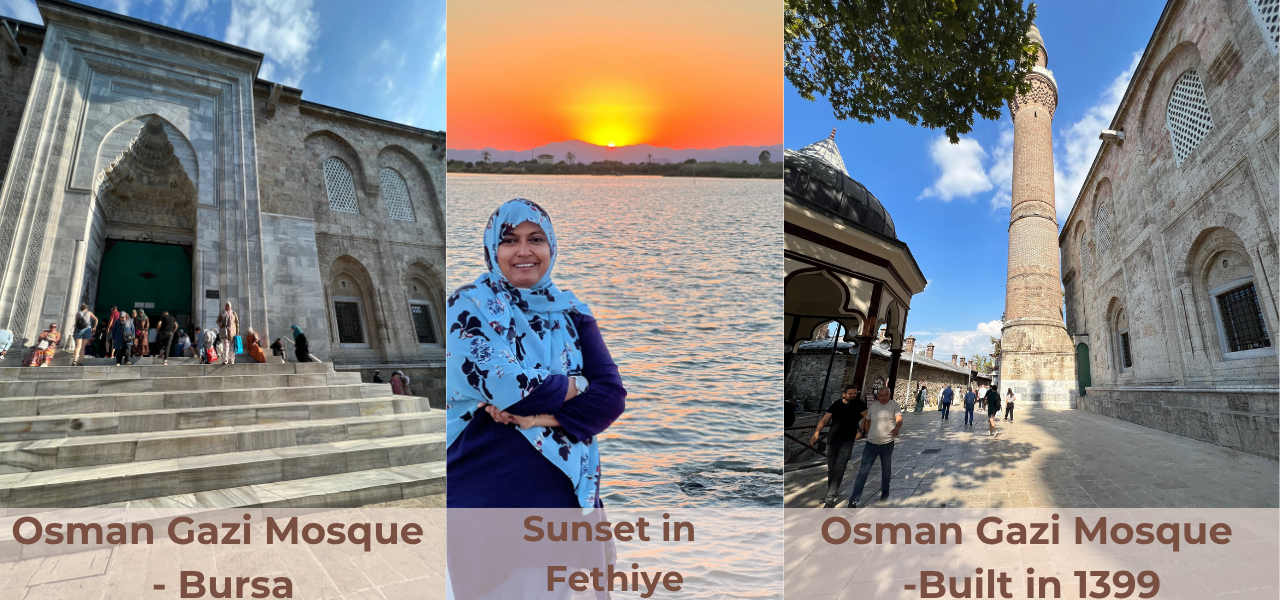
Our family's first trip to Türkiye in 2022 was never meant to be anything more than a vacation. Like many families, we wanted to experience the beauty of Istanbul, pray in its historic masajid, and expose our children to a part of Islamic history that cannot truly be appreciated through photographs or textbooks alone.
What I did not expect was how profoundly that journey would change me.
I stood inside the Blue Mosque and Hagia Sophia. I walked through the courtyards of Süleymaniye, past the old libraries, the madrasas, the hospitals built through the waqf system, the architecture of Mimar Sinan that has outlasted empires. I saw the legacy of a civilization that once considered excellence in worship, scholarship, science, governance, and service to be inseparable.
And it forced a difficult question.
What allowed a civilization like this to flourish? Was it wealth? Military strength? Political influence?
Or was it something far deeper?
The more I reflected, the clearer the answer became. These buildings did not appear because Muslims were rich. They appeared because Muslims knew who they were and why they existed. The Ottomans, and the generations before them, were not merely educated—they carried a powerful sense of identity and purpose. Their relationship with Allah shaped everything else. They never separated excellence in the Deen from excellence in the dunya. One strengthened the other.
That realization stayed with me long after we returned home. It moved me to write an article for MuslimMatters, encouraging Muslim families to visit Türkiye — not merely as tourists, but as families seeking inspiration from the legacy of our Ummah.
At the time, I believed I was simply sharing reflections from a meaningful trip.
I had no idea that Allah was preparing me for a journey that had only just begun.
So in 2023, we returned. But this time, I refused to travel the same way. Our first trip had moved me deeply—yet I had watched my own children treat those same masajid and monuments as little more than beautiful backdrops for photographs. The stories had not reached their hearts. So we went back to experience the history instead of merely touring it: to trace how the prophecy of Constantinople's conquest came to pass, to serve families in need with our own hands, to sit with the Uyghur community and know them as friends rather than headlines, and to take up the bow and the horse as the Prophet ﷺ taught us. That trip changed my children—and when other parents saw the change and asked how they could give it to their own, MNB Trailblazers was born. (I've told that story in full in Beyond Vacations.)
And then, in 2024, I returned to Türkiye once more—this time to attend The Prophetic Strategy Summit for the very first time.
What had begun as a single family vacation had, without my ever planning it, become something I could no longer call coincidence. Each summer pulled me back to the same soil. Each visit sharpened the same conviction.
The Question That Would Not Leave Me
Somewhere in those years, the question sharpened into something almost painful.
This was the Ummah that produced Umar ibn Abdul Aziz and Salahuddin. The Ummah of Sultan Mehmet the Conqueror. The Ummah of Ibn Sina, Al-Khwarizmi, and Mimar Sinan. The Ummah that gave the world algebra, hospitals, universities, and observatories.
How did we become an Ummah that now struggles, in so many homes, simply to raise confident, practicing Muslim children?
People answer this question in different ways. Politics. Economics. Colonialism. Media. The erosion of scholarship. Each explanation holds a piece of the truth, and I do not dismiss any of them.
But I kept returning to one thing.
The generations who built that civilization were once children too.
Someone shaped them. Someone told them who they were. Someone connected, in their young hearts, the love of Allah with the pursuit of excellence — and refused to let those two things live in separate rooms.
The revival I longed for was not waiting on a policy or a movement.
It was waiting on the way we raise our children.
Then I Attended TPSS
When I first saw the announcement for The Prophetic Strategy Summit(TPSS), something in me stirred immediately. My heart leapt. Before I had even thought it through, I heard myself say, I want to go.
In 2024, I attended TPSS for the first time — in Türkiye, the very land that had awakened these questions in me. It felt, once again, like timing I could never have arranged on my own.
I arrived expecting a conference.
What I found was something else entirely.
I had braced myself for nostalgia — for speaker after speaker reminding us of how great we once were. For the familiar comfort of looking backward.
That is not what happened.
Almost no one spoke in the past tense. The question in that room was not "How great were we?" It was "What are we going to build now?"
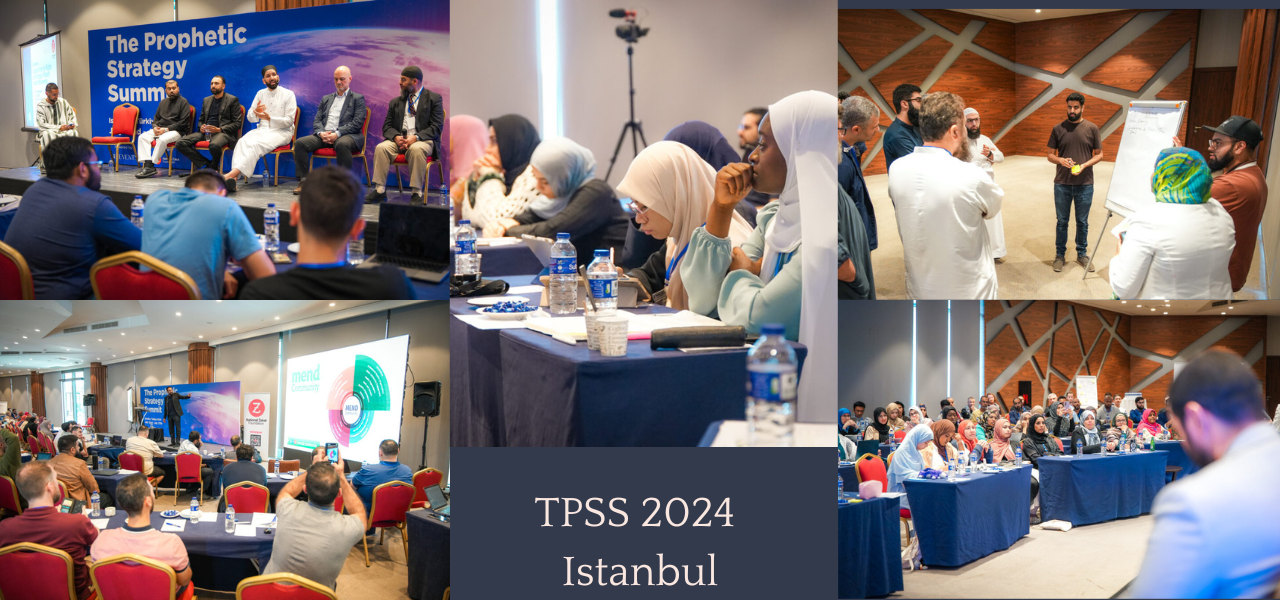
Every session, every conversation, every reflection carried the same forward-facing weight. Not a lament for a lost golden age, but a strategy for the next one.
I had come to learn. Instead, I found myself surrounded by people who had already stopped waiting.
Everyone Was Solving the Same Problem
The most striking thing was the overall experience, not any single talk.
It was a pattern.
I met educators. Scholars. People building in technology, in media, in youth work, in family and community life. They had come from around the world, from wildly different fields, carrying wildly different projects.
And no matter where they started, they were all circling the same question.
Whether someone worked in the classroom or the masjid, in a startup or a nonprofit, in da'wah or in the arts, everyone was asking a version of the same thing: how can the work of my hands serve this Ummah? How do we, each from our own corner, help our Ummah rise again to the excellence it once knew?
That was the thread running through every conversation. Not one shared answer — but one shared purpose. Everyone had arrived carrying a different piece of the same longing: to see our Ummah return to its glory.
I remember sitting there and feeling something settle in me. For over a decade I had carried that longing largely alone, often wondering whether I was seeing clearly. Now I was surrounded by people who carried it too — each in their own way, from parts of the world I had never visited.
I was not imagining it. And I was not alone in it.
The Moment Everything Clicked
For years I had been building Muslim Nation Builders — sometimes in moments of doubt, quietly asking myself whether I was even thinking about this the right way.
Sitting at TPSS, listening, talking, meeting person after person, something clicked.
We were all solving the exact same problem.
We had simply approached it from different angles.
Some approached it through scholarship. Some through technology. Some through community institutions.
My angle — the one Allah had placed in my hands — was families. Children. Heritage. The living history of our Ummah, and what happens in a child's heart when they stand where greatness once stood.
That was not a lesser piece of the puzzle. It was my piece of the puzzle.
Why MNB Trailblazers Exists
This moment is where everything I had been building came into focus. MNB Trailblazers had been born a year earlier, on that transformed trip in 2023—but sitting at TPSS, I finally understood its place in something far larger than my own family. It was not a program I had dreamed up. It was an answer to everything these journeys had been teaching me.
When we take our youth into the living history of our Ummah, we are not just sightseeing; we are building something much deeper. We are trying to forge three connections in the heart of a child, connections that no textbook alone can build.
A connection to Allah. When a child stands in a place built by people who worshipped with their whole lives, they begin to understand that all of this greatness grew from servitude to Allah. Excellence was never separate from the Deen. It was its fruit.
A connection to the Ummah. This bond has two sides. The first is legacy: a child who walks through this history stops seeing themselves as small and scattered, and realizes they are heirs to a civilization — that they belong to something vast, dignified, and unfinished. The second is service: to belong to this Ummah is not only to inherit its greatness, but to carry its needs. A child learns to see the pain of those less fortunate — the displaced, the hungry, the forgotten — and to feel that their own hands were made to help, to give, to serve. Pride in what we once were, and responsibility for who still needs us.
A connection to self. And when a child sees what people who looked like them, prayed like them, and believed like them once built, something shifts. The question changes from "Can someone like me do anything great?" to "Why not me?"
That is the seed. That is the entire point. Not to make our children admire the past, but to make them believe they can carry it forward.
And this is not a lecture our children sit through. It is something they live.
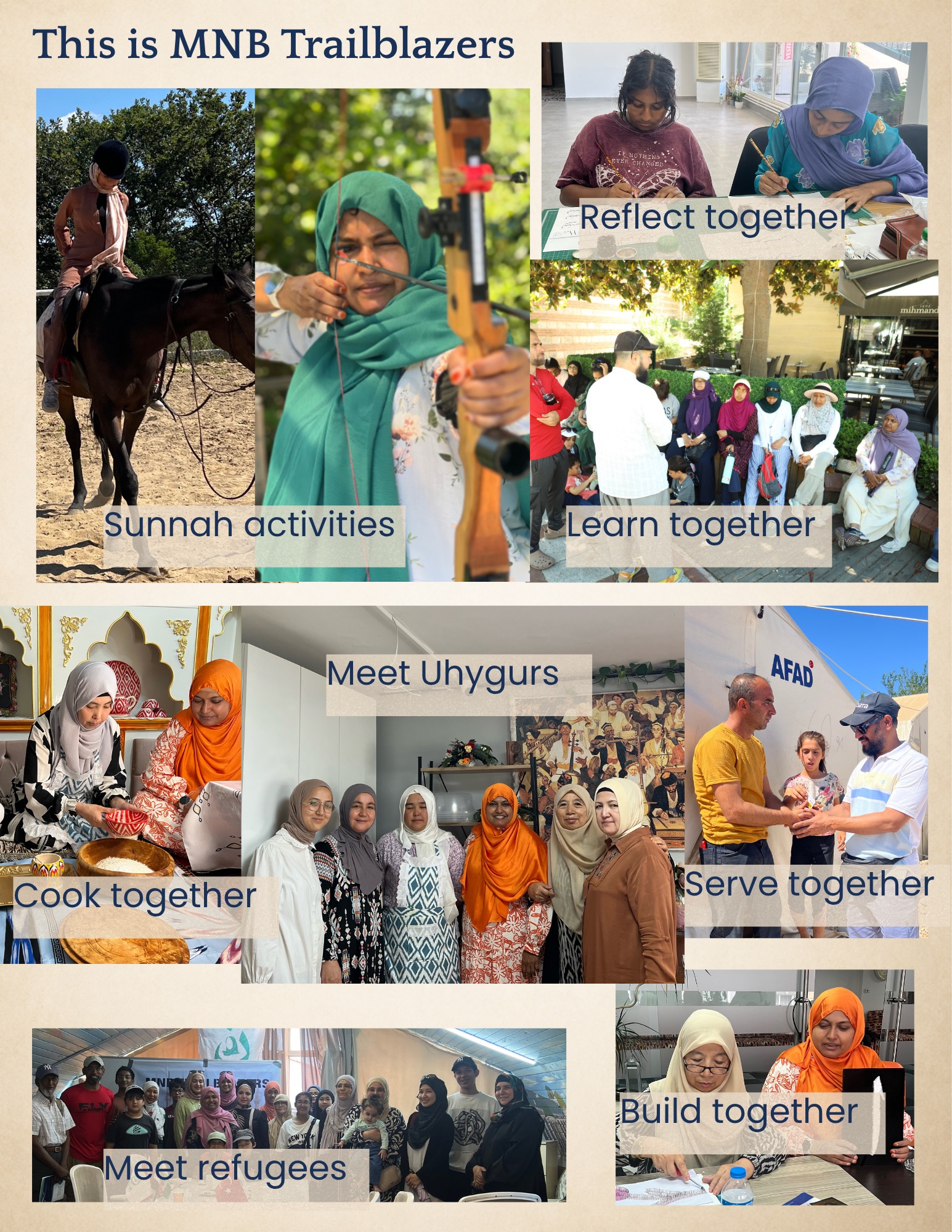
On a Trailblazers journey, our families ride horses and take up the bow, reviving the Sunnah with their own hands. They cook together and learn together. They sit with Uyghur families and listen to stories the world has tried to silence. They meet refugees who have lost almost everything — and they serve them, working shoulder to shoulder with relief teams to reach families displaced from their homes. The three connections are never taught on a whiteboard. They are forged in real places, with real people, through real service.
An Unexpected Honor
When I first attended TPSS in Türkiye in 2024, I came only to learn.
One year later, after completing our first MNB Trailblazers journey — again in Türkiye, with families who trusted me to guide their children through this history — I found myself boarding another plane.
This time to Malaysia.
Not simply as an attendee.
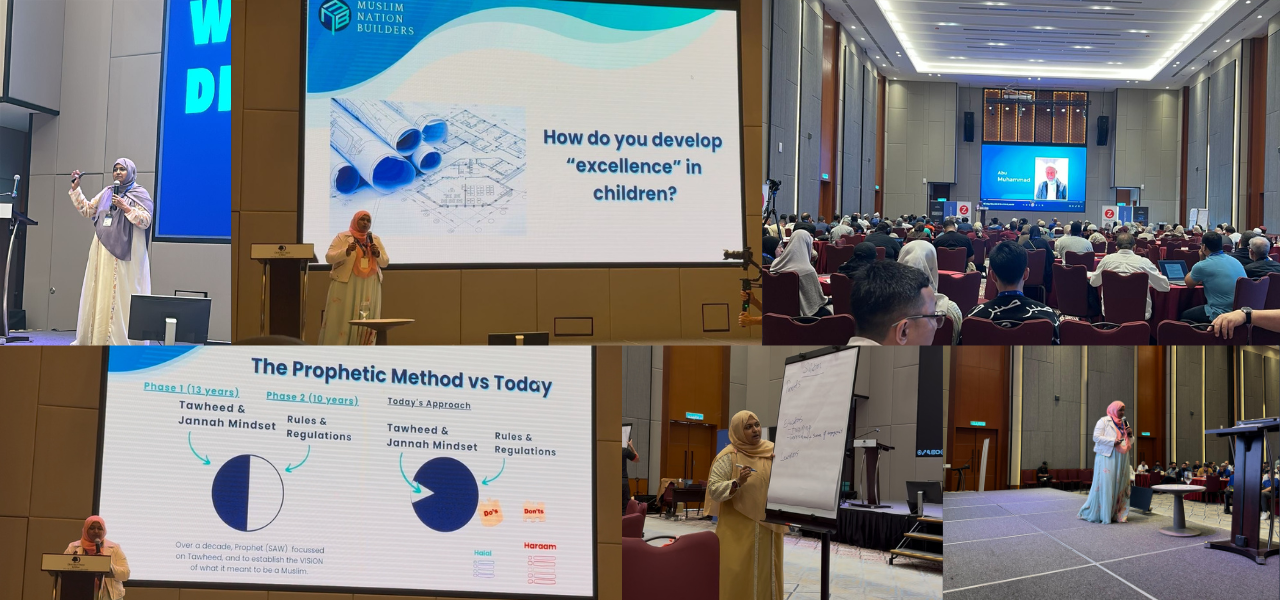
I was given an opportunity to present Muslim Nation Builders after it was selected as one of the projects worth sharing at TPSS.
I sat with that for a long time.
I do not see it as recognition. I have never done this work for recognition.
I see it as responsibility.
When Allah opens a door like that, it is not a reward for what you have done. It is a trust placed on your shoulders for what you have yet to do.
And this year, that trust grew heavier still.
MNB Trailblazers—the journeys that all of these reflections gave birth to—has been selected as one of the top ten projects chosen for funding. What began as a mother's quiet questions on a family vacation is now, by Allah's grace, something the wider Ummah has chosen to believe in and invest in.
I still do not call it recognition.
I call it an amanah.
Imagine
I keep returning to a single image.
Imagine if every child grew up with these three connections made strong—rooted deeply before they even reached the end of their teenage years, so that they meet the world already prepared for it.
Imagine if every homeschool did this work. Every Islamic school. Every youth group. Every parent at their own kitchen table.
Imagine a generation of Muslim children who know Allah, take pride in their Ummah, understand their purpose, and pursue excellence in every field they enter—not despite their faith, but because of it. This will be a generation ready to face the world, to grow, to contribute, and to strengthen the Ummah rather than merely survive within it.
That is not a fantasy. It is exactly how our Ummah built its greatness the first time—in Baghdad and Córdoba, in Cairo and Samarkand, in the Türkiye I walked through with my own children. Not through wealth or conquest alone, but one shaped heart at a time. One shaped heart at a time.
Revival will not begin when someone else finally solves our problems.
Revival begins the moment each of us asks a single, honest question:
What part of the Ummah has Allah entrusted to me?
For me, the answer has always been our children.
And as I board yet another flight to Istanbul this year — the fifth summer in a row — I no longer wonder whether these journeys are connected.
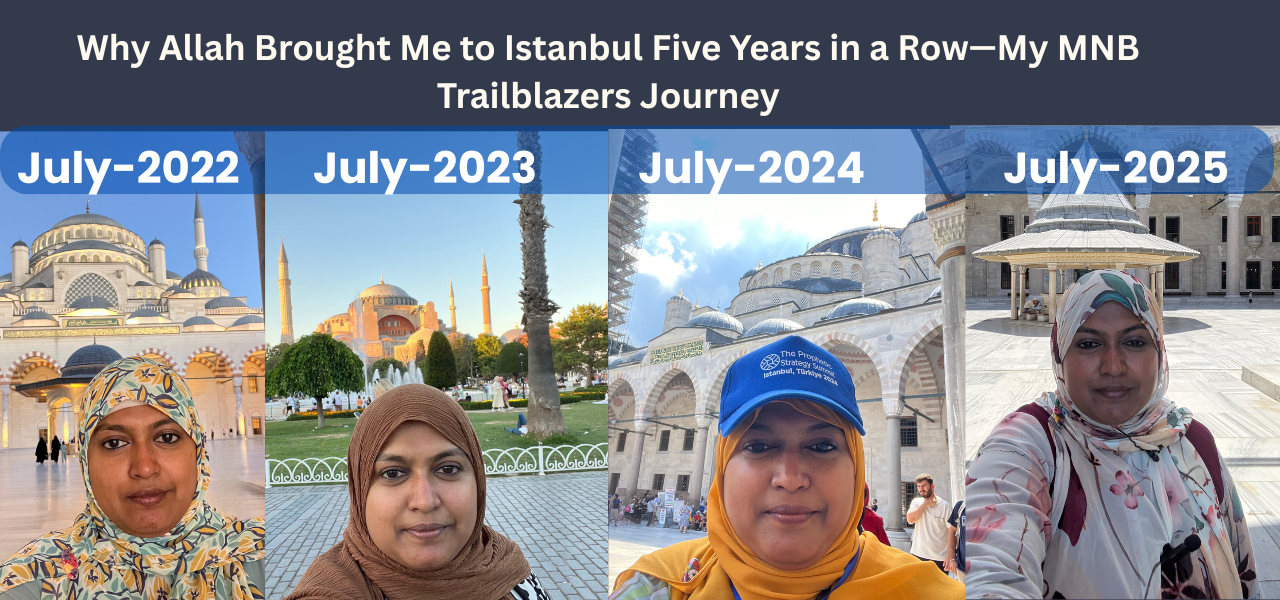
I know Who has been connecting them all along.
And the journey is not over.
This November, insha'Allah, another group of families and youth groups will set out with us to walk this same history, to serve, to reflect, and to return home carrying something they cannot unlearn.
Perhaps one of them is you. Perhaps one of them is your child. Perhaps it's your Sunday school students. Your eighth graders.
The next golden age will not build itself. But if we raise the ones who will build it — children connected to their Lord, to their Ummah, and to the best of who they were created to be — then by the mercy of Allah, it is already on its way.
*To learn more about the MNB Trailblazers journey this November, please visit our website: https://www.muslimnationbuilders.com/trailblazers
And to explore how your own community can take part in MNB Trailblazers, reach out to me directly at [email protected].
Sign up for the MNB monthly newsletter, which will bring you a treasure trove of fresh, beneficial content specifically tailored for the modern Muslim family.
